
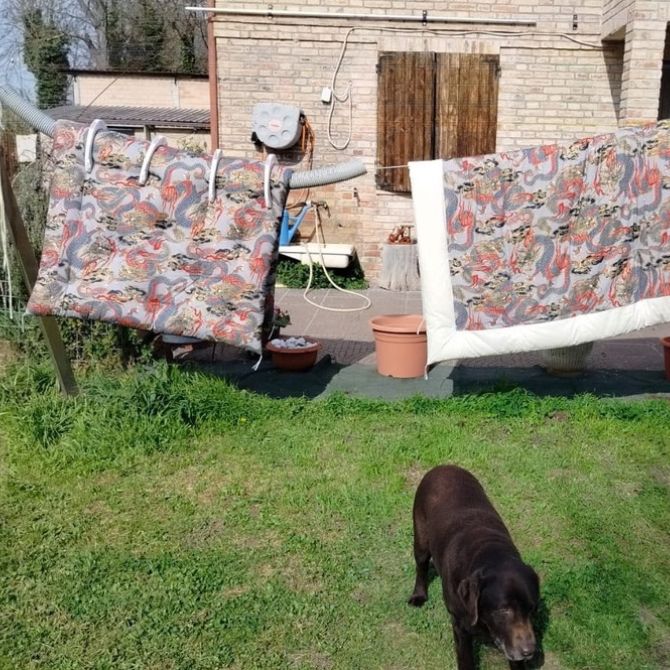
Why your Japanese futon needs to breathe
There’s a whole lot happening to your futon while you’re blissfully unaware.
You climb into bed, get cosy and drift off … and for the next several hours, your shikibuton is quietly doing its job:
Supporting you. Keeping you comfortable. And absorbing some of the heat and moisture your body naturally produces while you sleep.
So what happens when you get up?
Your futon needs a chance to breathe.
Why does it matter?
Cotton is naturally breathable and absorbent, which is one of the reasons it makes such a wonderful bedding material. But the moisture absorbed during the night doesn’t simply disappear when you get out of bed.
That’s why traditional Japanese futons are designed to be folded, aired and cared for rather than left permanently in the same position as your Western mattress would.
By giving your shikibuton some movement during the day, you’re helping that moisture evaporate and giving the natural cotton fibres a chance to dry and freshen up as it airs.
It’s not really about a complicated cleaning ritual.
It’s simply: Sleep on it → air it → fold it → repeat.
But do I have to put it outside?
Nope!
If you can hang your futon outside for some fresh air and sunshine, fantastic. But if you live in a flat, have limited outdoor space, or live somewhere where the weather seems determined to ruin every good idea for a picnic in the park … indoor airflow still helps.
Open a window when practical, give your room some ventilation with a fan and avoid leaving your futon compressed in exactly the same position all day.
The goal is airflow and drying, not perfection.
Why autumn is a good time to remember this
As the nights get cooler, windows tend to stay closed, heating comes on and we’re all much more inclined to turn the bedroom into a cocoon.
Lovely for us.
Not quite so lovely for moisture trapped in your bedding. So as you pile on the extra duvets this autumn, remember to give your futon a little breathing room during the day too. Your futon doesn’t need pampering. It just needs a little care.
Air it – give moisture somewhere to go.
Fold or reposition it – don’t leave it compressed in exactly the same place indefinitely.
Ventilate your room – fresh air helps.
Sun it when practical – sunshine is a bonus, not a requirement.
And if your futon ever starts smelling damp or musty, take that as its very polite way of saying: “Excuse me … I could use some fresh air over here.”
That’s one of the lovely things about a traditional Japanese shikibuton. It isn’t simply a mattress that stays in one position forever. It’s part of a different approach to sleeping. One where your bedding is used, cared for and refreshed as part of the daily rhythm.
Your futon works hard for you all night. In return, all it really asks is:
Let me breathe.
At Futons from Japan, our shikibutons are handmade in Kochi, Japan using traditional methods and natural cotton. Made to be slept on, cared for and enjoyed for years to come.
Now… go give your futon some fresh air.
It’s earned it! 😉
